Why Are My Air Ducts Popping? Normal Pings vs Sounds to Fix
| Written by | Ask About HVAC Editorial Team | Expert review | ✓ J.T. Bratcher |
|---|---|---|---|
| Published | Last reviewed | ||
| Sources | 5 cited | Reading time | 4 min |
Quick answer
Light pinging, ticking or popping from metal ducts when the heat starts or stops is usually normal: the metal expands as warm air flows through it and contracts as it cools. Trane lists ductwork pinging as it expands and contracts among the normal sounds of a heating system (Trane). A loud bang right when the blower shuts off is different. That's usually oil-canning, a duct panel flexing from a quick pressure change, and it can point to a clogged filter or ducts that are too small (CenterPoint Energy).
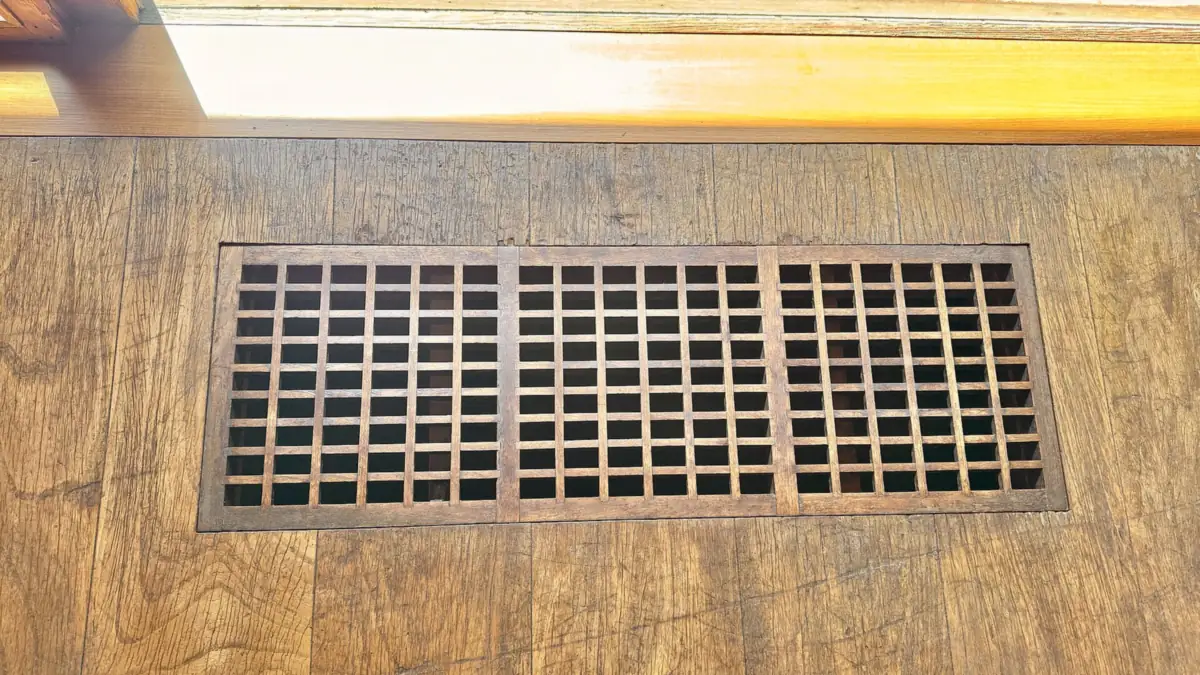
Which popping sound do you have?
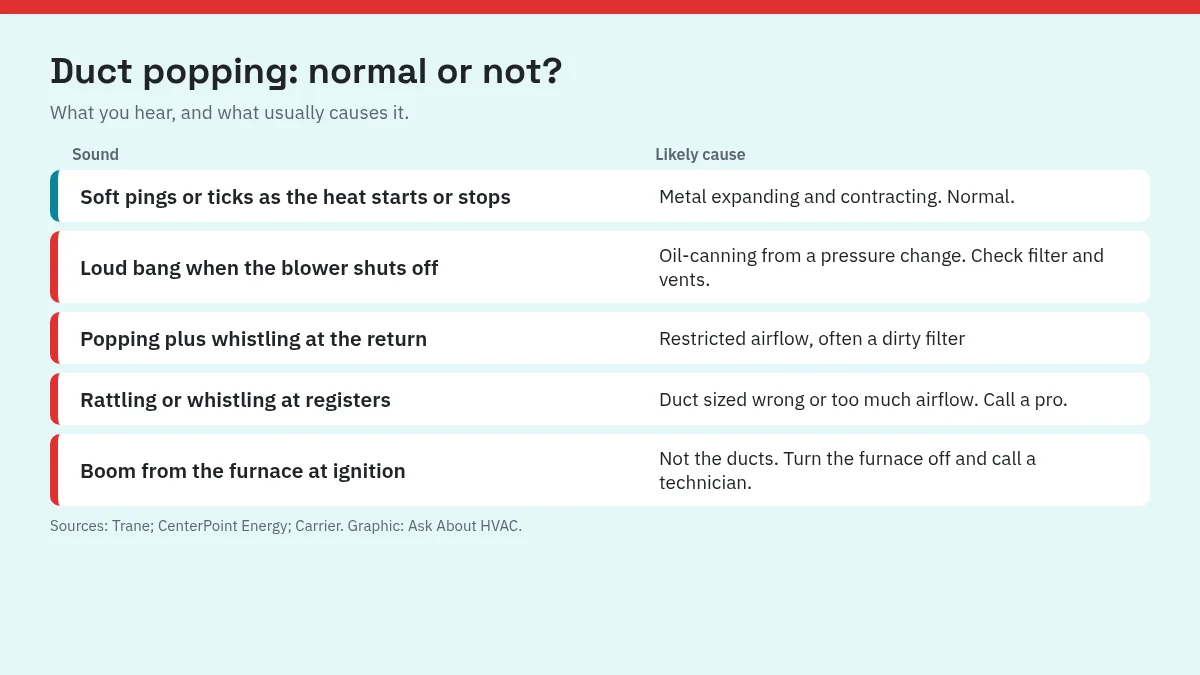
| What you hear | Likely cause | What to do | Source |
|---|---|---|---|
| Soft pings or ticks as the heat starts or stops | Metal ducts expanding and contracting | Nothing; it's normal | Trane; CenterPoint Energy |
| Loud pop or bang right when the blower shuts off | Oil-canning from a fast pressure change | Check the filter, open vents and returns, then call a pro if it persists | CenterPoint Energy |
| Popping plus whistling at the return grille | Restricted airflow, often a dirty filter | Replace the filter | CenterPoint Energy |
| Rattling or whistling at the registers | Duct sized incorrectly or too much airflow | Have a technician check the duct system | Trane |
| Loud boom from the furnace when the burners light | Not a duct noise; a furnace problem | Turn the furnace off and call a technician | CenterPoint Energy |
Expansion pings: normal
Sheet metal ducts are galvanized steel or aluminum (Trane). When the furnace sends warm air through ducts that have cooled off, the metal reacts to the fast temperature change. CenterPoint Energy describes this pinging or tapping as normal thermal expansion in a healthy system. You'll usually hear it as warm air starts flowing and again as the ducts cool after the heat shuts off.
Why it's louder in winter
CenterPoint Energy says that in cold places furnaces run more often and work harder, so you hear more pinging and popping as the ducts expand and contract (CenterPoint Energy).
Oil-canning bangs: check airflow first
The louder bang comes from air pressure, not heat. CenterPoint Energy calls this popping oil-canning and says it happens when the air pressure in the ducts changes quickly as the blower stops. The name comes from the way thin sheet metal snaps in and out, like the side of an oil can. CenterPoint also says that if the sound is very loud, the ducts may be too small or the filter may be clogged, and that a dirty filter can make ducts pop loudly because the system has to work harder to pull air in.
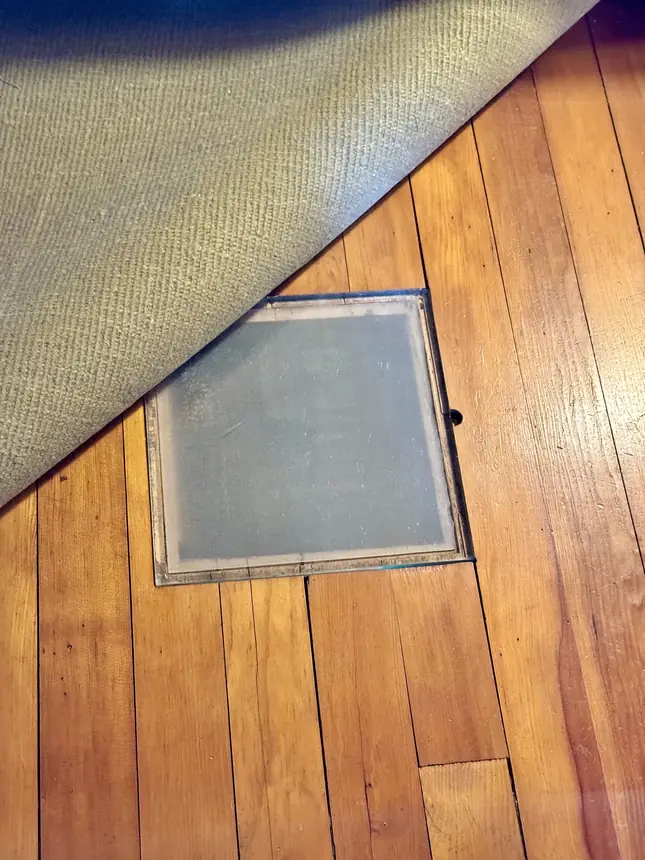
Start with the filter; our guide How to Tell If Your Furnace Filter Needs Changing walks through the light test. If you hear a similar bang when the blower starts, the same airflow checks are a sensible first step. Then work through the rest:
Replace the filter if it's dirty. Check the filter about every 30 days during heating season and replace it when it looks dirty, as CenterPoint recommends (CenterPoint Energy).
Open supply registers. Carrier notes that closing too many supply registers disrupts the airflow the system was balanced for (Carrier).
Clear return grilles of furniture, rugs and drapes.
Listen for where it's coming from. Note whether it's a trunk duct near the furnace or a branch run, and whether it happens at blower start, blower stop or both. That helps a technician find the panel.
If the bang continues with a clean filter and open vents, a technician can measure airflow and static pressure and check whether the ducts are undersized. Trane recommends calling a pro when vents rattle or whistle, since it can mean a duct sized incorrectly or too much airflow (Trane).
Some supply ducts also have dampers, small adjustable plates that control airflow to parts of the house (Trane). Closed dampers change duct pressure the same way closed registers do, so a technician can check them.
What you can do yourself, and what needs a pro
You can do the filter, register and return checks above. ENERGY STAR says some homeowners also seal accessible ducts themselves, using mastic sealant or metal tape and never duct tape, and insulate ducts in attics, crawlspaces, unfinished basements and garages (ENERGY STAR). Sealing and insulating won't stop oil-canning by itself, but leaky ducts are worth fixing while you are looking: ENERGY STAR estimates that in a typical house about 20 to 30 percent of the air moving through the ducts is lost to leaks, holes and poor connections.
Leave it to a pro if the bang persists with a clean filter and open vents, if the ducts may be undersized, or if a panel needs to be stiffened or a section replaced. ENERGY STAR notes that most heating and cooling contractors also repair ductwork.
When the noise isn't the ducts
A boom or bang from the furnace cabinet when the burners light is not duct noise. CenterPoint Energy lists a loud boom or bang at startup among furnace noises that may signal a problem. Trane says banging sounds alongside short cycling, soot or a metallic smell are reasons to call for furnace repair and to shut the furnace off in the meantime (Trane). Don't keep restarting a furnace that booms.
If you smell rotten eggs, leave the house and call your gas company from outside, as Trane advises.
FAQ
Is it normal for ducts to pop when the heat comes on?
Light pinging or ticking at startup and shutdown is normal. Trane lists ductwork pinging as it expands and contracts among the normal sounds of a heating system.
Why do my ducts bang when the blower shuts off?
CenterPoint Energy calls this oil-canning and says it happens when the air pressure in the ducts changes quickly as the blower stops. If it's very loud, the ducts may be too small or the filter may be clogged.
Can closing vents make ducts pop?
Closing supply registers changes the airflow the system was balanced for. Carrier warns that closing too many registers or blocking returns disrupts that balance, so reopen them before calling for service.
When is a popping sound dangerous?
When it's a loud boom or bang from the furnace at burner startup rather than a ping in the ducts. CenterPoint lists a loud boom at startup as a sign of a problem; turn the furnace off and call a technician.
Sources
| # | Source | Site |
|---|---|---|
| 1 | Is This Normal? HVAC Smells and Sounds, Explained, Trane | trane.com |
| 2 | What Do Furnace Noises Mean?, CenterPoint Energy (gas utility) | centerpointenergy.com |
| 3 | Why Do I Need to Worry About Ductwork?, Trane | trane.com |
| 4 | Duct Sealing, ENERGY STAR (U.S. EPA) | energystar.gov |
| 5 | Furnace Limit Switch Guide, Carrier | carrier.com |
Every number above was checked against these sources. Found an error? See corrections or email contact@askabouthvac.com.

J.T. Bratcher
- License
- TACLB00138638E
- Type
- Texas Air Conditioning and Refrigeration Contractor License (Environmental, Class B)
- Status
- Current · expires April 11, 2027
- Checked
- October 18, 2026 via TDLR All Licenses dataset (data.texas.gov), license 138638
Related answers
- Fu · Furnaces
How to Tell If Your Furnace Filter Needs Changing: 5 Checks
Pull the filter and hold it up to a light: if you can't see light through it, replace it. Also change it if it's wet, damaged or past the maker's interval (about 3 months for 1-inch pleated filters). Here are the checks and the warning signs from the system.
- Th · Thermostats
Should Your AC Fan Be On or Auto? What the Humidity Research Shows
In humid climates, keep the AC fan on Auto: measured tests show fan On puts water from the coil back into your air. When On or Circulate makes sense, and a simple test for your home.
- Fu · Furnaces
Furnace Filter Put In Backwards? Which Way the Arrow Goes and What to Do
The airflow arrow on a furnace filter points toward the blower, away from the return duct. If yours is in backwards, turn the system off and flip it. Here is how to find the right direction when the arrow is missing or hard to read.