AC Refrigerant Leak Signs: 7 Clues and What to Do Next
| Written by | Ask About HVAC Editorial Team | Expert review | ✓ J.T. Bratcher |
|---|---|---|---|
| Published | Last reviewed | ||
| Sources | 7 cited | Reading time | 4 min |
Quick answer
The most common signs of an AC refrigerant leak are air from the vents that isn't as cold as it should be, higher indoor humidity, ice on the indoor coil or refrigerant lines, a hissing or bubbling sound, oily residue around fittings, and electric bills that rise without a rate increase (Trane; Lennox). Several of these can have other causes, so check the filter first. If the signs persist, turn the AC off and call an EPA-certified technician to find and repair the leak.
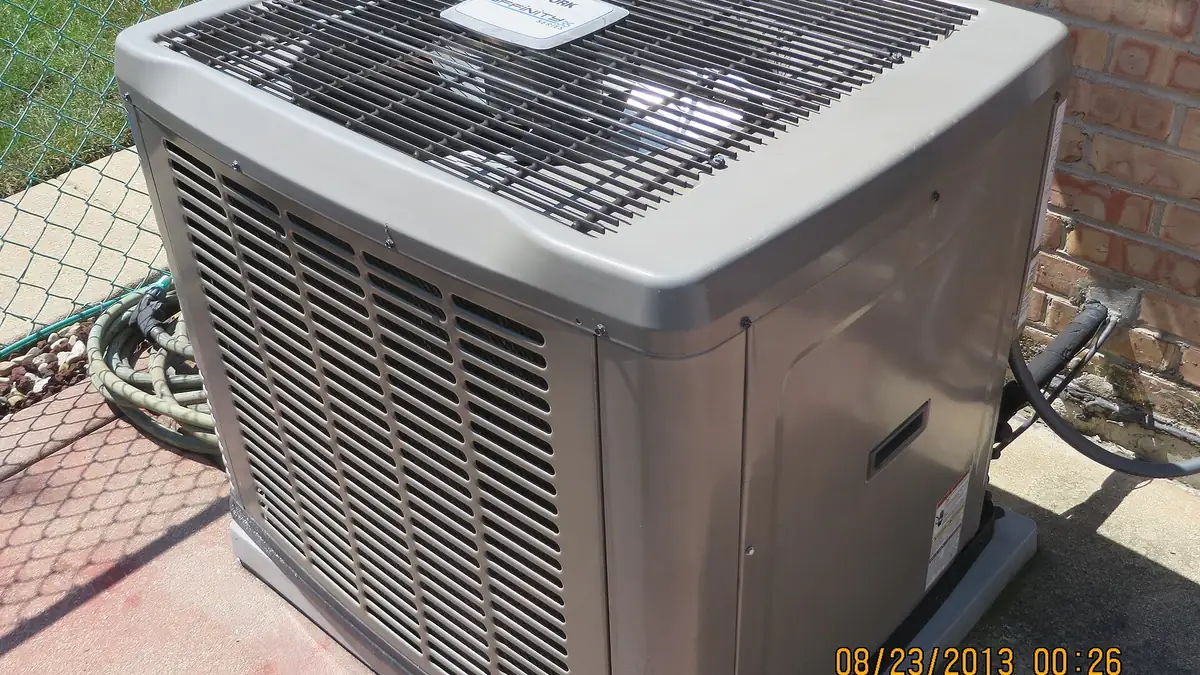
7 signs of a refrigerant leak
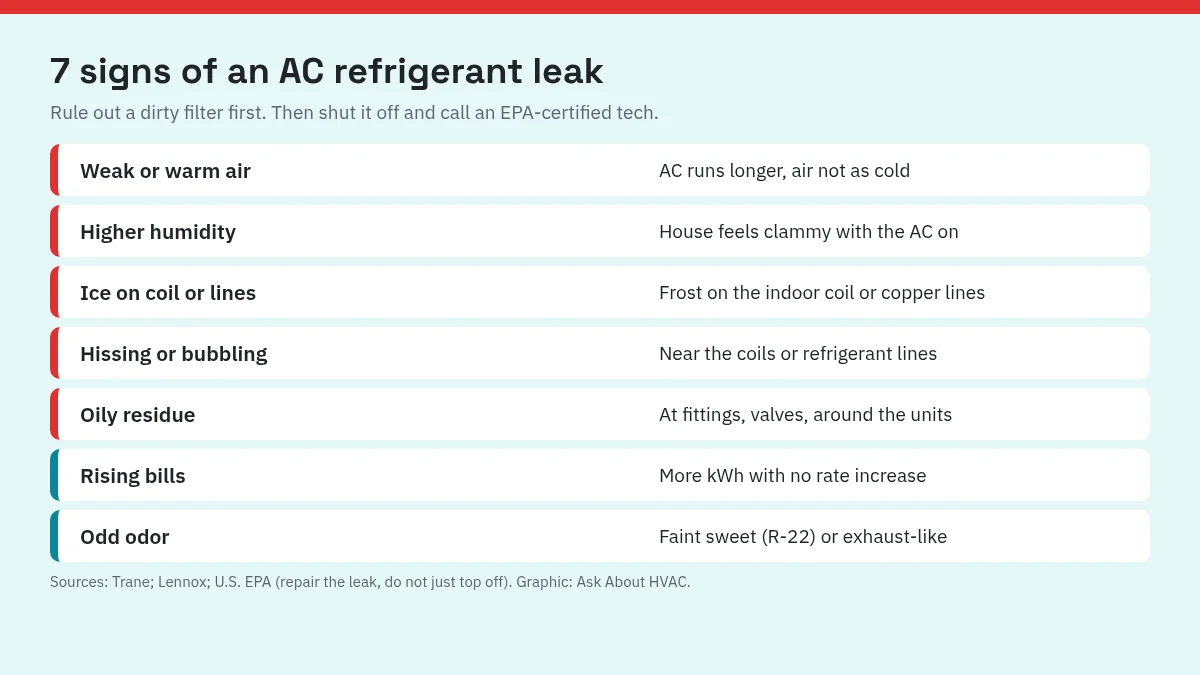
| Sign | What you'll notice | Source |
|---|---|---|
| 1. Weak or warm air | Vents blow air that isn't as cold as usual; the AC runs longer | Trane, Lennox |
| 2. Higher humidity | The house feels clammy even with the AC on | Trane, Lennox |
| 3. Ice on the coil or lines | Frost on the indoor coil or the copper lines at the outdoor unit | Lennox, Trane (frozen coils) |
| 4. Hissing or bubbling | Hissing near the coils or refrigerant lines; a larger leak can bubble | Trane, Lennox |
| 5. Oily residue | Oil stains at fittings, valves or around the indoor and outdoor units | Trane |
| 6. Rising bills | Higher electric use with no rate increase | Trane, Lennox |
| 7. Odor | A faint sweet smell (R-22) or an exhaust-like smell with a big leak | Trane, Lennox |
Trane and Lennox both point out that these signs can also come from other problems. A dirty filter, for example, can cause weak cooling and a frozen coil too (Trane).
What causes a refrigerant leak
A home AC is a sealed system, so it should not lose refrigerant in normal use. Trane lists the usual causes as wear and tear, corrosion, physical damage, a frozen evaporator coil and improper installation (Trane). American Standard adds vibration and skipped maintenance to that list (American Standard). Two practical clues follow from this: a line that was recently bumped by a mower or trimmer is worth a close look, and an older system with past repairs is more likely to have a corroded coil.
Rule out the easy causes first
Before assuming a leak, check the things that cause the same symptoms:
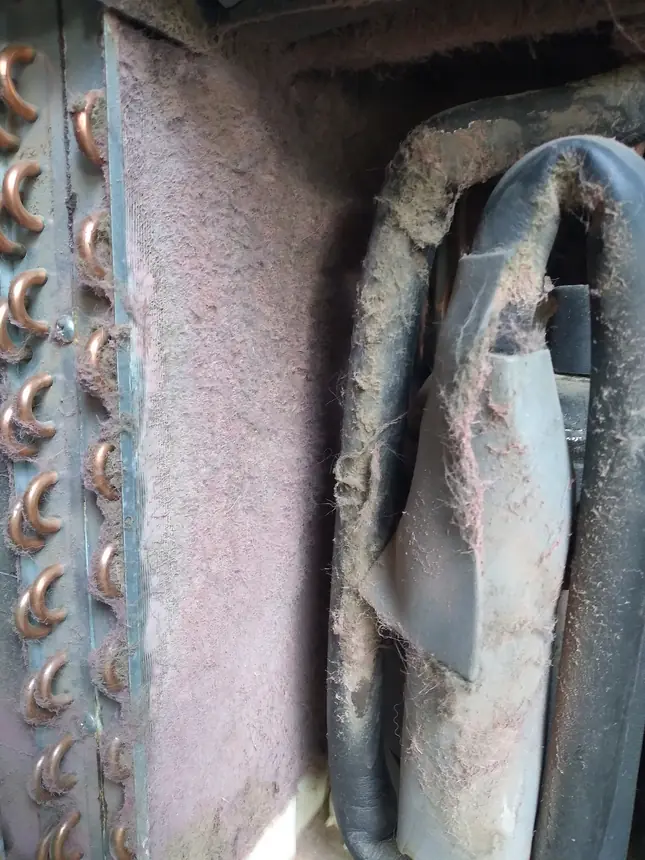
- Filter. Lennox says to check that your filters are clean when the air isn't cold enough. Trane lists a dirty filter as the top cause of frozen evaporator coils.
- Return vents. A couch or other furniture blocking a return vent reduces airflow over the coil, another frozen-coil cause Trane names.
- Thermostat. Confirm it's set to Cool and the setpoint is below room temperature.
- Drain line. Water around the indoor unit can come from a clogged condensate drain, a separate problem from refrigerant.
If you do see water, our guide to water dripping from the furnace in summer covers clogged AC drains.
Safe checks you can do
Trane suggests a few things a homeowner can look at without opening the system:
- Look at fittings, valves and around the indoor and outdoor units for oil stains.
- Listen near the refrigerant lines for hissing.
- Soapy water test: spray a mix of water and a little dish soap on the refrigerant lines. A large leak will make bubbles. No bubbles doesn't mean no leak, because small leaks are hard to find this way.
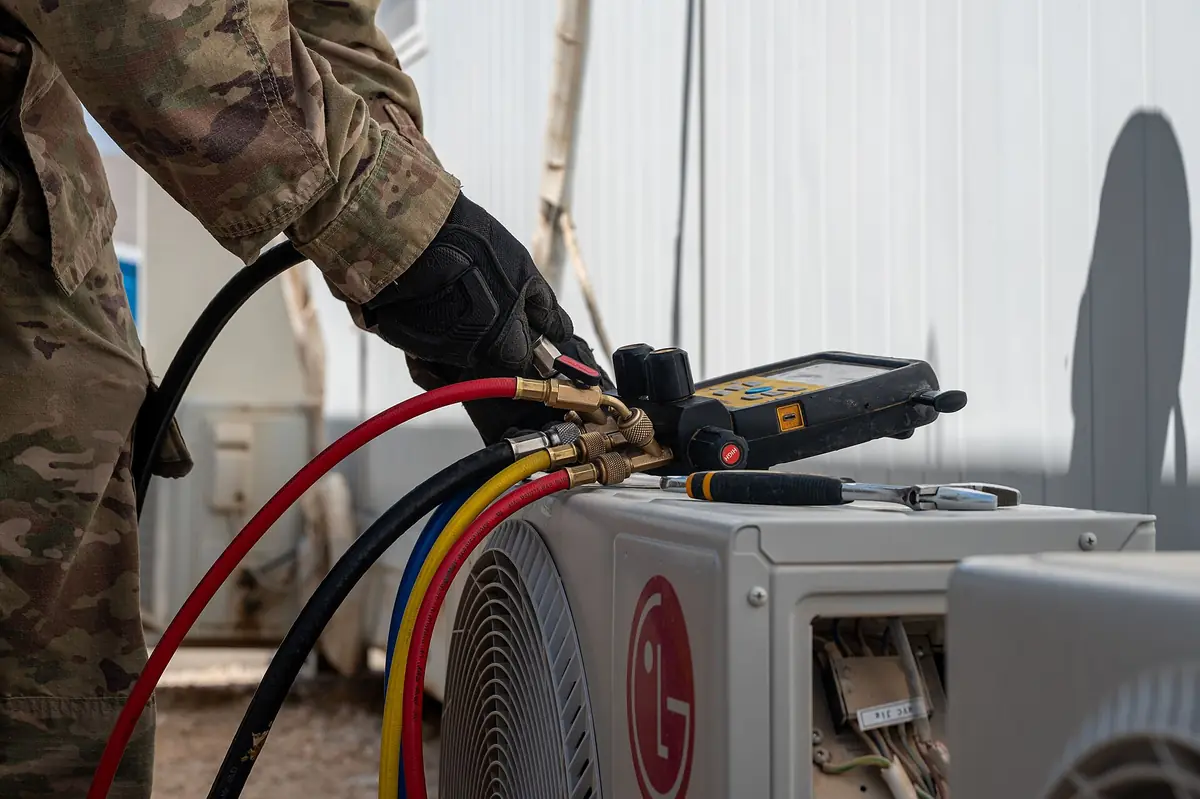
Don't connect gauges or open any part of the refrigerant circuit. EPA says attaching hoses and gauges, adding or removing refrigerant, and cutting refrigerant lines all require Section 608 technician certification (EPA).
What to do if you suspect a leak
- Turn the AC off. Trane says running with a refrigerant leak can do further damage to the system. Lennox adds that running on a low charge strains the compressor.
- If there's ice, let it thaw. Trane says not to chip at ice on the coil, because that can damage the coil and cause a leak.
- Call a certified technician. EPA regulations under Section 608 require technicians who service equipment that could release refrigerant to be certified (EPA). You can ask to see their certification card.
- Know how they will look for it. American Standard lists the usual methods: a visual check for oily spots, an electronic leak detector, soap bubbles during a nitrogen pressure test, and UV dye, which can take a week or so to show results. It also notes that even with these tools a small leak may not be found on the first visit (American Standard).
- Ask for a repair, not a top-off. EPA recommends that homeowners ask technicians to locate and repair leaks instead of "topping off" a leaking system.
If you smell a strong chemical odor
Poison Control says that if you suspect a refrigerant leak, leave the area and breathe fresh air, and set up a portable fan to improve ventilation while you wait for a technician. If someone feels sick after breathing it, call Poison Control at 1-800-222-1222 (Poison Control).
If your system uses R-22
Older systems may use HCFC-22 (R-22). EPA says you can keep using and servicing an R-22 system, and that no new R-22 has been made or imported into the U.S. since January 1, 2020. Reclaimed R-22 is still available for service. There are no "drop-in" replacements, and EPA warns that products sold as "R-22a" are a flammable hydrocarbon blend that is not an acceptable alternative (EPA). The refrigerant type is usually listed on the nameplate on the outdoor unit.
Repair or replace?
Trane calls it a personal decision based on system age and cost. If repair bills keep climbing and the AC is more than 15 years old, Trane says replacing it may be more cost-effective than another repair (Trane). Sizing a replacement properly is a separate step. Our guide to central air sizing explains how a Manual J load calculation works.
FAQ
Can I add refrigerant to my AC myself?
No. EPA says Section 608 certification is required to recharge appliances, and refrigerant for stationary equipment like home AC is only sold to certified technicians or the companies that employ them.
Should I just have the system topped off?
EPA recommends asking the technician to locate and repair the leak instead of topping off a leaking system. That protects the environment and reduces repeat service calls and operating costs.
Can I keep running my AC with a refrigerant leak?
Trane says no: running with a leak can do further damage to the system. Shut it off until it's repaired and recharged.
What does a refrigerant leak smell like?
Trane says some refrigerants, such as R-22, can give off a faint, sweet smell like nail polish remover. Lennox describes an exhaust-like odor with a significant leak. If you smell it, turn the unit off and call a professional.
Sources
Every number above was checked against these sources. Found an error? See corrections or email contact@askabouthvac.com.

J.T. Bratcher
- License
- TACLB00138638E
- Type
- Texas Air Conditioning and Refrigeration Contractor License (Environmental, Class B)
- Status
- Current · expires April 11, 2027
- Checked
- October 18, 2026 via TDLR All Licenses dataset (data.texas.gov), license 138638
Related answers
- Ac · Air Conditioning
How Long Should an AC Take to Cool 1 Degree? Why There Is No Single Number
There is no industry standard for minutes per degree. What a normal AC run looks like in mild weather vs a heat wave, why sites disagree, and a 1-hour test to tell if yours is too slow.
- Ac · Air Conditioning
Water Dripping From Your Furnace in Summer? It's Usually the AC Drain
Water under a furnace in summer almost always comes from the AC coil sitting on top of it, not the furnace. A 2-minute check to find the source, a cause table, and safe fixes.
- Du · Ducts & Airflow
Why Are My Air Ducts Popping? Normal Pings vs Sounds to Fix
Light pings when the heat starts or stops are normal duct expansion. A loud bang when the blower shuts off is oil-canning. What to check, and when to call a pro.