How Long Does Ductwork Last? Why the Age Number Misleads
| Written by | Ask About HVAC Editorial Team | Expert review | ✓ J.T. Bratcher |
|---|---|---|---|
| Published | Last reviewed | ||
| Sources | 6 cited | Reading time | 5 min |
Quick answer
Search for a ductwork lifespan and you will find 10 years, 25 years and "the life of the house," sometimes on the same page. The disagreement is real, and it tells you something useful: a duct is not one part. It is metal or plastic tubing, joints, sealant, insulation and hangers, and those pieces wear out on very different schedules. The tubing itself rarely fails first. The joints, the supports and the insulation usually do.
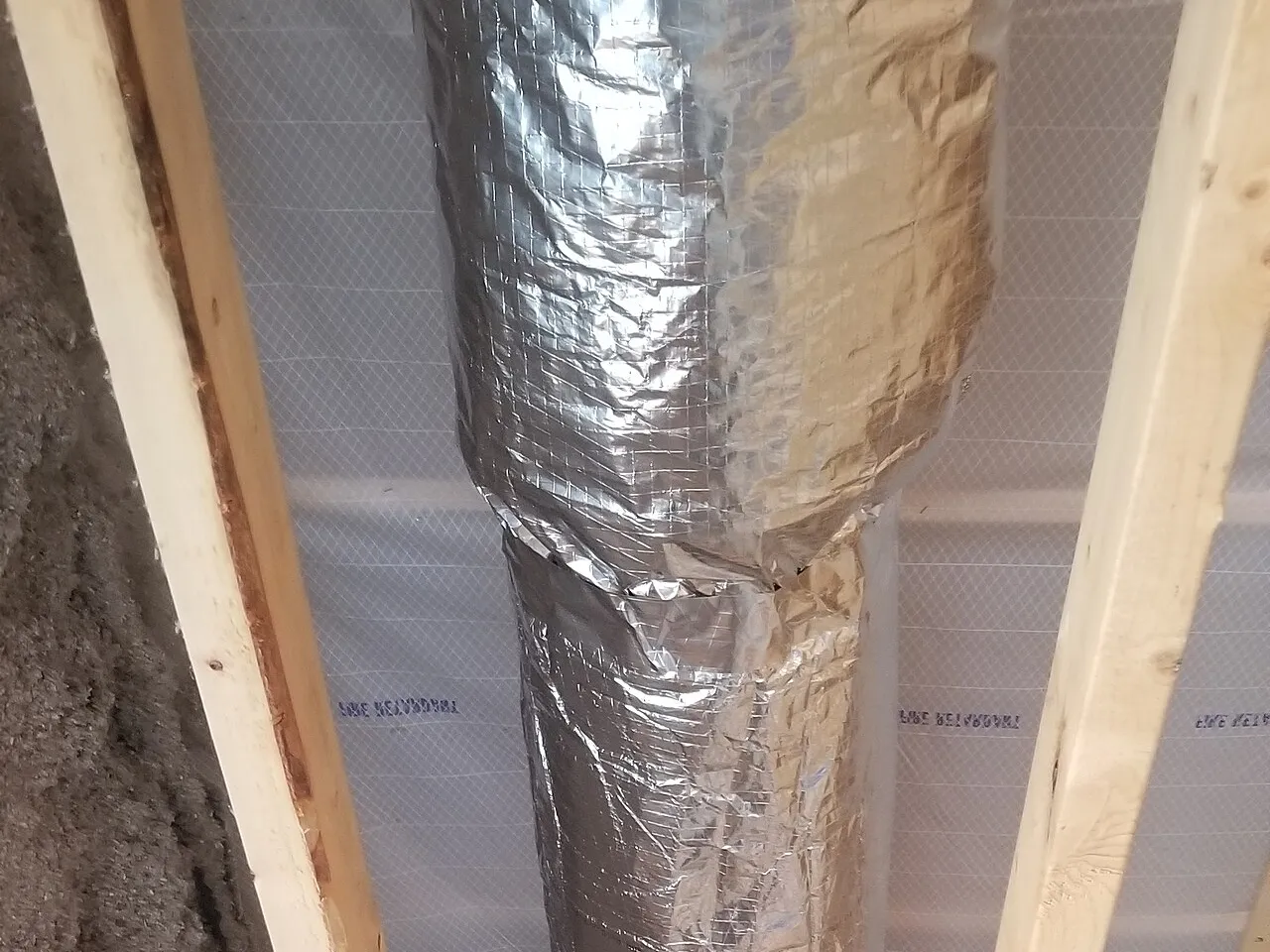
So instead of trusting a number, judge your ducts by condition. Below is where the published figures come from, what each one actually measures, and a short inspection you can do with a flashlight.
Where the lifespan numbers come from
The most cited survey is the National Association of Home Builders' 2007 Study of Life Expectancy of Home Components, produced with Bank of America Home Equity. NAHB built it from a 2006 telephone survey of manufacturers, trade associations and researchers. Its HVAC table lists ducting at 10 years, dampers at 20+ and diffusers, grilles and registers at 25.
That 10-year figure surprises people, and it should be read with the report's own caveats. NAHB says life expectancy depends on installation quality, maintenance, weather and climate, and intensity of use, and that the table is "a general guideline only," not a guarantee for any product.
A second data point comes from Lawrence Berkeley National Laboratory. In a 1998 write-up of duct sealant aging tests, researchers Max Sherman and Iain Walker noted that houses are supposedly designed to last 30 years, while flex duct systems are often rated for 15.

Our reading: these numbers describe when parts of a duct system commonly start needing work, not a date when sheet metal stops carrying air. The rest of this guide covers the parts that wear out.
What fails first
The sealant at the joints
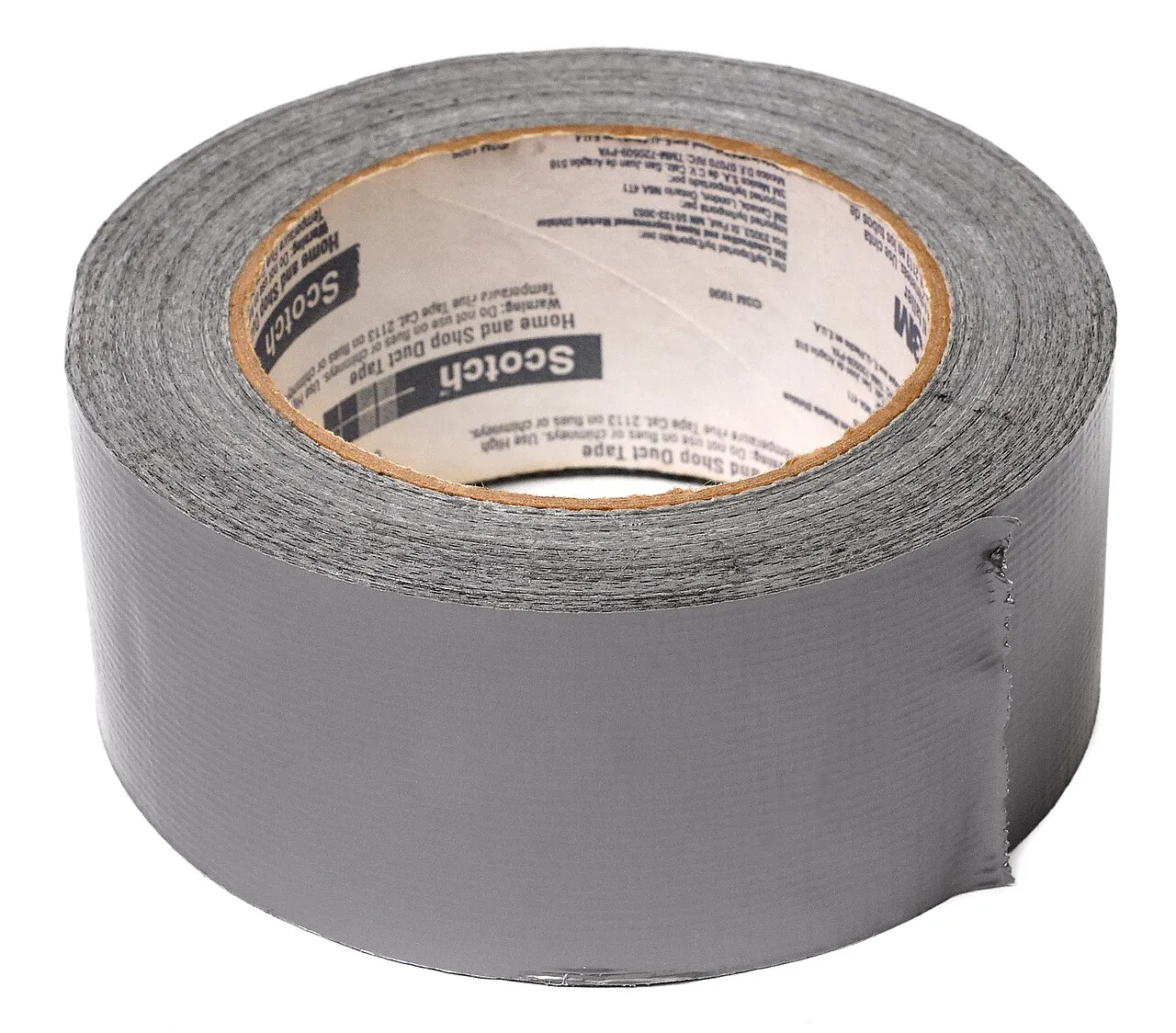
Every duct joint is a potential leak, and the material holding it shut has a shorter life than the duct. Berkeley Lab ran 19 sealant samples through a rig that cycled hot and cold air through standard duct joints. Eleven duct tape products failed within days, some falling right off, and only one duct tape survived three months. Clear tape, foil-backed tape, mastic and aerosol sealant kept good seals for the whole test. The researchers suspected heat was degrading the tape's adhesive, and noted that attic temperatures can easily reach 150°F.
They also pointed out that UL ratings for duct tape cover strength and fire resistance, not longevity. A "contractor grade" label tells you nothing about how long it will hold a joint.
Flex duct supports
Flexible duct depends on how it is hung. Building America's flex duct support guidance calls for supports at the manufacturer's spacing but never more than 4 feet apart, no more than half an inch of sag per foot between them, and straps at least 1.5 inches wide. Spaced too far apart, the duct sags and restricts airflow. Too narrow or too tight, and the strap crushes the inner liner and compresses the insulation.
In our view, that sensitivity to installation is the main reason flex gets a shorter rating than rigid metal.
Insulation and moisture
Insulated ducts in attics, crawl spaces and garages can take on water from condensation or leaks. EPA's duct cleaning guidance is blunt here: if insulated ducts get wet or moldy, the insulation cannot be effectively cleaned and should be removed and replaced. EPA adds that moisture can enter through leaks or poor installation, and that mold returns if the cause is not fixed.
What leaky, aging ducts cost you
ENERGY STAR estimates that in a typical house about 20 to 30 percent of the air moving through the ducts is lost to leaks, holes and poor connections. Its signs list is a decent self-check: high summer and winter bills, rooms that are hard to heat or cool, stuffy rooms, ducts in an attic, crawl space or garage, and tangled or kinked flex duct.
There is a safety angle too. ENERGY STAR's duct sealing benefits page says leaky ducts can reduce system efficiency by as much as 20 percent and can cause backdrafting, where combustion gases from a furnace, water heater or dryer get pulled back into the house. If you have gas appliances and leaky return ducts near them, that is worth a professional look regardless of age.
A 20-minute duct check
You can see most of what matters on a cool day with a flashlight and the system running. In an attic, stay on the joists.
- Start at the registers. ENERGY STAR names the connections where ducts meet floors, walls and ceilings as common places to find leaks and disconnected ductwork. Pull a register cover and look for gaps around the boot.
- Feel the joints. Run a hand along accessible seams and branch takeoffs. Moving air on your skin means a leak.
- Read the tape. Dried, curling cloth tape can mean the joint is already leaking, given how quickly duct tape failed in Berkeley Lab's tests. Foil tape or gray mastic smeared over the seam is what you want to see.
- Sight down the flex runs. Look for sag between straps, kinks at bends, crushed sections and runs lying on insulation or framing instead of hanging.
- Look for water. Stained insulation, rust on metal, drips below the duct or a musty smell are moisture problems. If the system smells musty when it runs, connect the two.
- Listen. Popping or banging from metal ducts is a separate issue, and our guide to ducts that pop and bang covers that separately.
Dust blowing from registers is a different question with its own answer. See whether your ducts actually need cleaning before paying for it.
Repair, seal or replace?
Seal when the ducts are structurally fine but leaky. ENERGY STAR says to use mastic sealant or metal tape on accessible joints, insulate accessible ducts, and never use duct tape. Many homeowners hire this out, and ENERGY STAR notes most heating and cooling contractors also repair ductwork.
Repair or re-hang when flex is sagging but intact, or a single section has pulled off its collar.
Replace a section when insulation is wet or moldy, flex is crushed or torn, or metal has rusted through.
Consider a larger redo when you are replacing equipment and the existing ducts are undersized, badly routed or leaking throughout. ENERGY STAR notes a well-designed, sealed duct system may let you choose a smaller, less costly unit. If you are sizing new equipment, our explainer on what size central air unit you need shows why duct capacity belongs in that conversation, and the same replacement visit is a good time to check how much life your evaporator coil has left.
The short version
Published figures put ducting at 10 years (NAHB's 2007 table) and flex systems at a 15-year rating (Berkeley Lab), but those are guidelines about when work starts, not expiration dates. In our view, duct runs can stay in service longer than those figures when the joints are sealed, the flex is supported and everything stays dry. Inspect the joints, supports and insulation, fix what fails, and replace only the sections that cannot be saved.
FAQ
My house is 25 years old. Should the ducts go when I replace the AC?
Not automatically. Have the contractor inspect and, ideally, leakage-test the existing runs. Replace sections that are crushed, disconnected, wet or moldy, and seal the rest with mastic or metal tape. ENERGY STAR notes that a well-designed, sealed duct system may even let you install a smaller, less costly unit.
Is flex duct worse than sheet metal for lifespan?
It is easier to damage. Berkeley Lab noted flex duct systems are often rated for 15 years, and flex fails early when it is hung with straps too far apart or too tight. Building America's guidance calls for supports no more than 4 feet apart and no more than half an inch of sag per foot.
Can I just re-tape the old joints?
Yes, but not with cloth duct tape. In Berkeley Lab's aging tests, duct tape was the only sealant type that failed, while foil tape, clear tape, mastic and aerosol sealant held. ENERGY STAR says to use mastic sealant or metal tape and never duct tape.
What damage means a duct section must be replaced, not repaired?
Wet or moldy duct insulation is the clearest case. EPA says insulated ducts that get wet or moldy cannot be effectively cleaned and should be removed and replaced, and that the moisture source has to be fixed or the mold comes back.
Sources
| # | Source | Site |
|---|---|---|
| 1 | Study of Life Expectancy of Home Components, NAHB and Bank of America Home Equity (2007) | reservedataanalyst.com |
| 2 | Sealing HVAC Ducts: Use Anything But Duct Tape, Lawrence Berkeley National Laboratory | www2.lbl.gov |
| 3 | Duct Sealing, ENERGY STAR | energystar.gov |
| 4 | Benefits of Duct Sealing, ENERGY STAR | energystar.gov |
| 5 | Support at Intervals for Flex Ducts, Building America Solution Center (PNNL) | basc.pnnl.gov |
| 6 | Should You Have the Air Ducts in Your Home Cleaned?, U.S. EPA | epa.gov |
Every number above was checked against these sources. Found an error? See corrections or email contact@askabouthvac.com.

J.T. Bratcher
- License
- TACLB00138638E
- Type
- Texas Air Conditioning and Refrigeration Contractor License (Environmental, Class B)
- Status
- Current · expires April 11, 2027
- Checked
- October 18, 2026 via TDLR All Licenses dataset (data.texas.gov), license 138638
Related answers
- Du · Ducts & Airflow
Does Ductwork Need to Be Cleaned? When It Helps and When It's a Sales Pitch
EPA does not recommend routine duct cleaning. It makes sense for substantial visible mold, rodents or insects, or ducts clogged with debris. Here's how to check, what to skip and how to hire safely.
- Du · Ducts & Airflow
Why Are My Air Ducts Popping? Normal Pings vs Sounds to Fix
Light pings when the heat starts or stops are normal duct expansion. A loud bang when the blower shuts off is oil-canning. What to check, and when to call a pro.
- Mt · Maintenance
How Long Do Evaporator Coils Last? What Decides 15 Years vs 5
Trane and Carrier both put evaporator coil life at 10 to 15 years. Here is what shortens it (corrosion, dirt, leaks), how warranty registration changes the math, and when to replace.