How to Choose the Right Mini Split: Zones, Sizing, SEER2 and Cold-Climate Specs
| Written by | Ask About HVAC Editorial Team | Expert review | ✓ J.T. Bratcher |
|---|---|---|---|
| Published | Last reviewed | ||
| Sources | 7 cited | Reading time | 9 min |
Quick answer
Choose the right mini split by working through the decisions in order: confirm ductless fits the house, get a load calculation for every room or zone you want to condition, decide how many outdoor units you need, pick an indoor unit style for each room, and only then compare efficiency ratings and brands. If you live where winters get below freezing for weeks, add one more filter: a model certified for cold climates, with the manufacturer's capacity data at 5°F. Many retail buying guides start at the end, with a BTU chart and a brand list. The steps below start where the installer's math does.
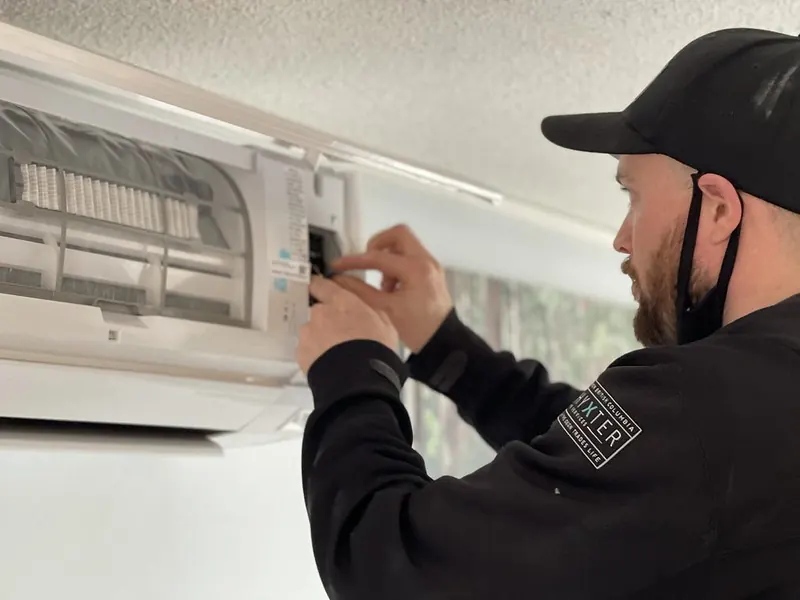
Step 1: Make sure ductless is the right fit
ENERGY STAR describes mini split heat pumps as designed for homes, or parts of homes, that don't have ductwork. Its ductless heating and cooling guide lists where they make the most sense:
- Older homes with radiators or baseboard heat that never had central air.
- Additions and outbuildings where extending ducts is difficult, such as a garage or a shed.
- A room next to unconditioned space, like a guest room over a garage.
- Rooms with chronic hot or cold spots, including home offices.
- Homes heated with electric resistance, propane or oil, where a heat pump lowers the bill. ENERGY STAR says certified mini splits use up to 60% less energy than standard electric radiators.
The same page adds the counterpoint: if your home already has ductwork, a ducted air-source heat pump may be the better system. ENERGY STAR notes that ducted heat pumps connect to the conventional forced-air ductwork found in most American homes.
Step 2: Size each room, not the house
Square-foot charts are a starting point, nothing more. ENERGY STAR says your contractor should verify the size with Manual J, a calculation of the heating and cooling your home actually needs. The Building America Solution Center's ductless heat pump guide, written by Pacific Northwest National Laboratory for DOE, takes it two steps further:
- Run Manual J for each zone, then use ACCA Manual S to pick matched indoor and outdoor units.
- Use the manufacturer's expanded performance table, not the AHRI certificate. The certificate lists capacity at factory test conditions of 95°F outdoors, 80°F indoors and 67°F wet bulb. Your house runs at your local design temperatures, which can be very different.
- In cold climates, the guide points to sizing methods from NEEP, Natural Resources Canada and DOE for heating in climate zones 4 and higher.
Oversizing is the trap to avoid. The DOE guide warns that oversized or badly located indoor units can short cycle, which wastes energy and does not provide proper temperature or humidity control. A head that satisfies the setpoint in a few minutes and shuts off can leave a bedroom cool but clammy.
For a quick sanity check on a single room, try our room air conditioner BTU calculator. For whole-house ducted equipment, the logic is covered in what size central air unit you need.
Step 3: Decide between single-zone and multi-zone
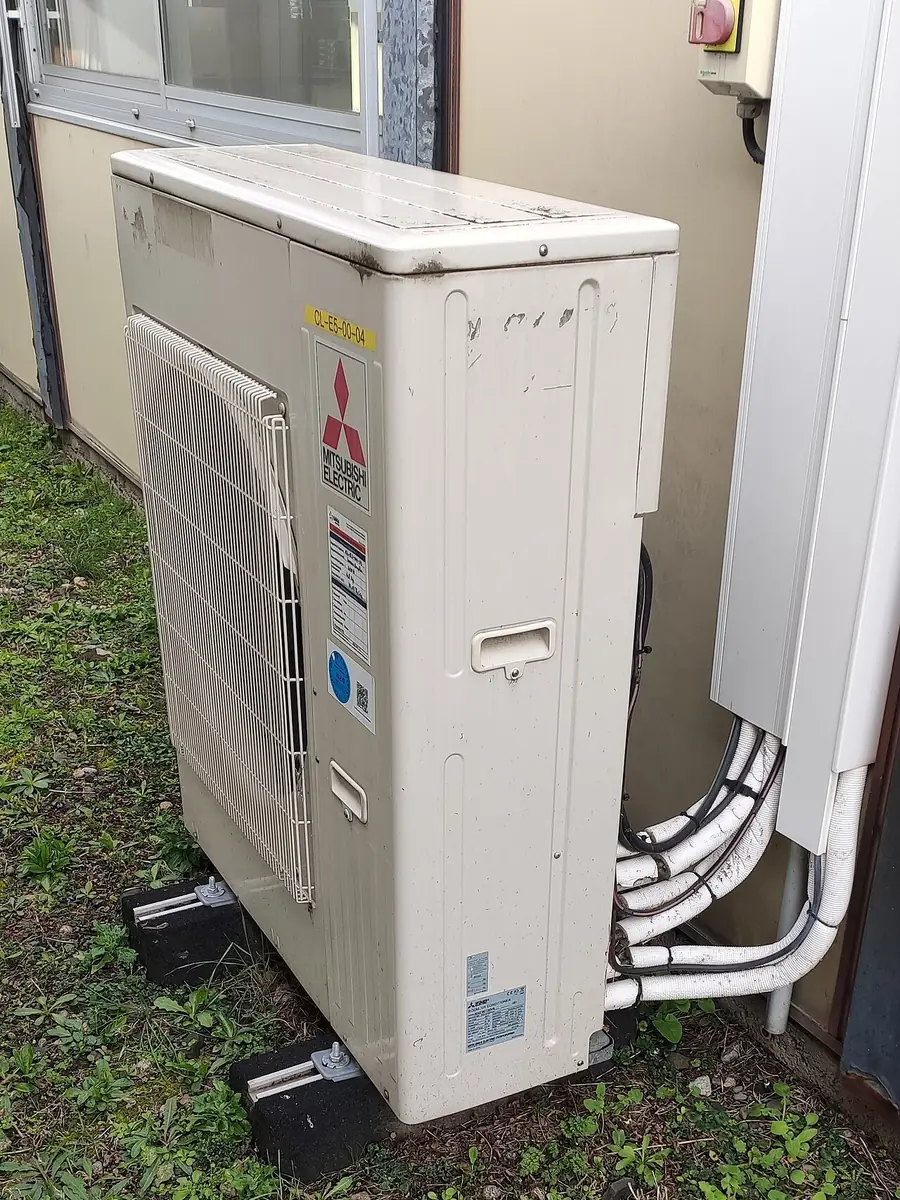
A one-to-one system (one outdoor unit, one indoor unit) is what the DOE guide says is often called a "mini-split." A multi-split connects several indoor heads or small air handlers to one outdoor unit. The guide notes it is generally not recommended to connect more than three indoor units to one outdoor unit, though some models allow as many as eight.
Here is the part sales pages skip. DOE's guide says that even when an indoor unit is turned off on a multi-split, some refrigerant will generally still flow through it. If you expect to run often with one or more heads off (a guest room, a bonus room), it will most likely be better to install more than one outdoor unit, grouping the rooms that run daily on one and the occasional rooms on another.
For small rooms next to a conditioned one, the same guide describes two options short of another head: a small air transfer fan between rooms, or a ducted mini-split air handler that serves a few nearby rooms through short ducts. Either needs a return path, such as a vent between rooms or undercut doors.
Step 4: Pick the indoor unit style for each room
DOE's guide says indoor units are usually hung on a wall or set in the ceiling, with floor-mounted consoles also available. The differences matter more than the look:
| Indoor style | Where it shines | What to watch |
|---|---|---|
| High-wall head | Single rooms with open wall space up high | Senses temperature near the ceiling; DOE notes the blower wheel tends to collect moisture in cooling mode, so dust and mold build up more than on other styles |
| Ceiling cassette | Rooms where you don't want a visible wall unit; only the grille shows | Needs space above the ceiling; also senses temperature high in the room |
| Floor console | Rooms where you want the unit to sense temperature near where people sit | Intake sits closer to head height, so the sensing problem largely goes away |
| Ducted mini air handler | One to three small nearby rooms, with the equipment out of sight | Needs short duct runs and a return path between rooms |
The temperature-sensing note comes straight from DOE's guide: because warm air rises, a wall or ceiling unit reads a higher temperature than you feel at chest height. Some models can use a wired or wireless wall thermostat to fix that, and the guide says some require the manufacturer's own thermostat, which can be costly. Ask before you buy.
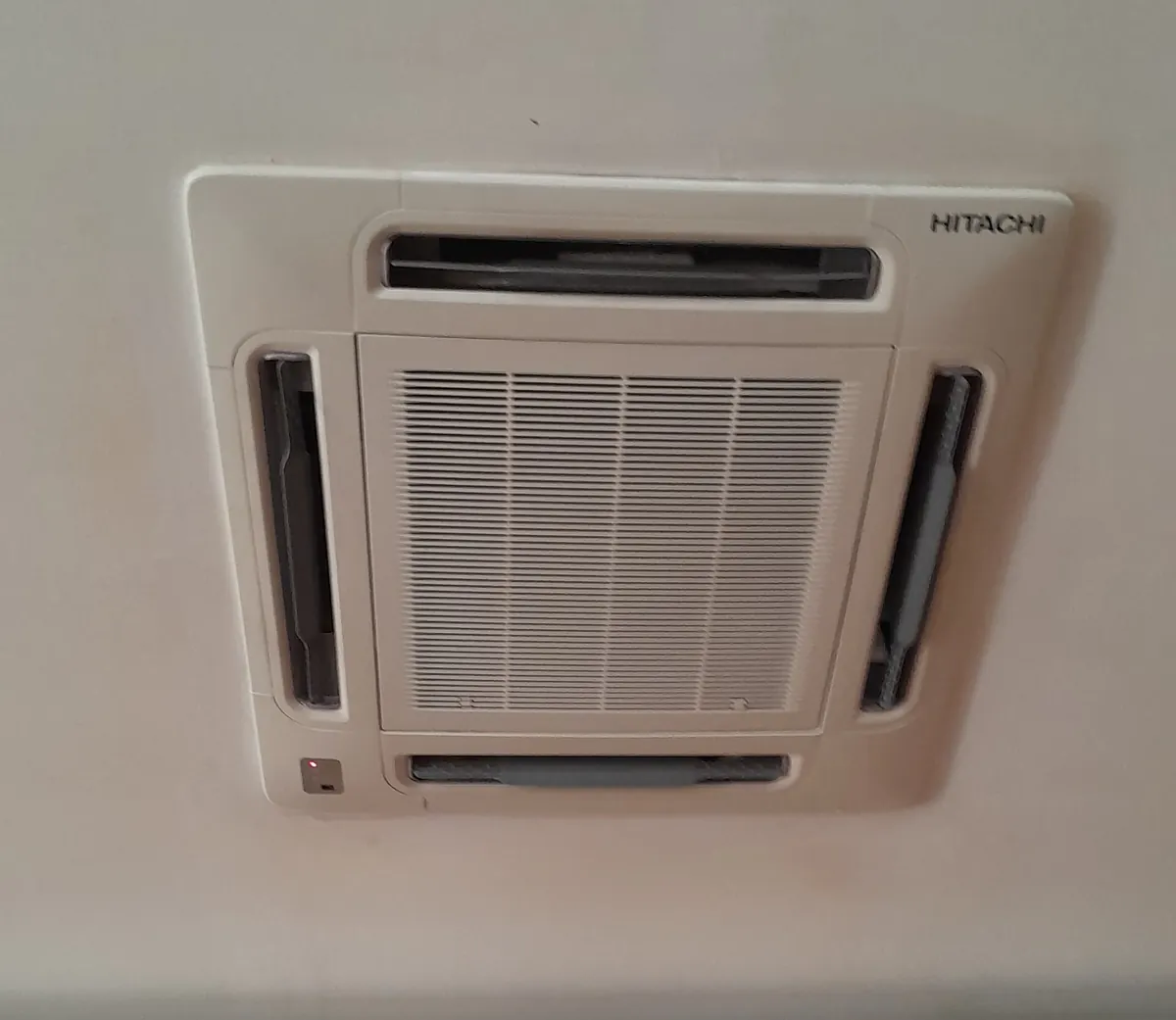
Step 5: Read the efficiency numbers correctly
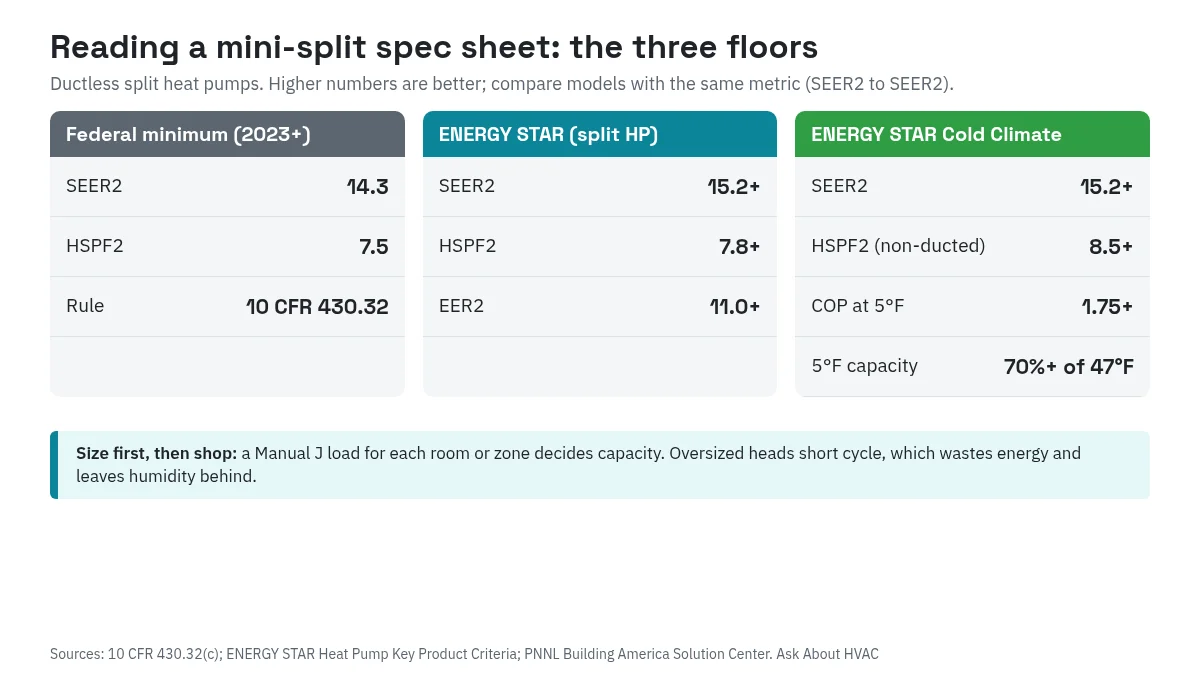
For equipment made since January 1, 2023, the federal standards are written in SEER2 and HSPF2. Three floors are worth knowing:
- Federal minimum. Under 10 CFR 430.32, split-system heat pumps made on or after January 1, 2023 must reach at least 14.3 SEER2 and 7.5 HSPF2.
- ENERGY STAR. The ENERGY STAR heat pump criteria for split systems are 15.2 SEER2, 7.8 HSPF2 and 11.0 EER2 or better.
- ENERGY STAR Cold Climate. Non-ducted split units need 8.5 HSPF2 or better, plus proof of low-temperature performance (Step 6).
SEER2 and HSPF2 are the seasonal cooling and heating metrics in DOE's current test procedure, and EER2 is a cooling efficiency ratio that ENERGY STAR also sets a floor for. Our take: if you mostly heat, weigh HSPF2 more heavily than SEER2. For how much a higher rating is worth on your bill, see what counts as a good SEER rating.
One thing ratings don't show is how low the unit can throttle. DOE's guide says inverter compressors let ductless systems ramp down to as little as 10% of rated capacity, which is what lets a well-sized head run long, quiet cycles instead of short ones. Ask for the minimum capacity of each model you're considering; it's worth comparing.
Step 6: In cold climates, ask for 5°F data
ENERGY STAR treats a heat pump's capacity at 47°F as its nominal heating capacity, and its cold-climate criteria check how much of that is still there when it's much colder. ENERGY STAR's cold-climate certification requires third-party verified testing down to 5°F, and the criteria set two bars at that temperature: a COP of at least 1.75, and heating capacity at 5°F of at least 70% of the capacity at 47°F.
ENERGY STAR adds that a cold-climate unit keeps working below 5°F, but that pairing it with a backup heat source is the most efficient way to cover the very coldest days. DOE's guide notes that some models can operate at an outdoor temperature of -15°F for heating, and tells buyers in climate zones 4 and higher to review manufacturer data on capacity and efficiency at low temperatures before selecting equipment. Outdoor units run defrost cycles in winter; for when frost on the coil becomes a problem, see why a heat pump has ice on it.
Step 7: Check power, filtration and upkeep
- Voltage. DOE's guide says single-zone 115/120V ductless units exist, ranging from 6,000 to 12,000 BTU/hr. Confirm the voltage on the spec sheet and make sure any new circuit is in the quote.
- Filtration. Many ductless systems have washable mesh filters with very low particle capture, according to the DOE guide, and add-on filters often cover only part of the airflow. If allergies drive the purchase, ask about the MERV rating of filters the unit can use.
- Cleaning. The guide cites a typical manufacturer recommendation to clean the mesh filters every two weeks, and recommends a deep cleaning of wall-hung heads every 1 to 3 years. It calls deep cleaning generally not a DIY job.
When a head stops responding, a power reset often clears it; our guide on how to reset a mini split covers the steps.
Step 8: Plan where each unit goes
ENERGY STAR's installation tips are short and practical:
- Indoors, think about air movement. Heat rises and cool air sinks, and ENERGY STAR notes heat has a hard time moving through an open doorway and can't move through a closed one. A single head in a hallway won't condition the bedrooms off it with the doors shut.
- Outdoors, keep it away from doors and windows. Outdoor units release water when they defrost, which can form icy patches.
- Watch the roofline. Check for roof runoff and add a rain cap if needed.
- Leave room to service it. Consider access for future maintenance when you pick the spot.
- Hide the line set. Routing the refrigerant lines through closets, basements, attics or garages cuts down on wall patching.
The DOE guide adds that refrigerant may need to be added, or recovered, depending on how long the line sets are compared with the factory charge. That's one reason line length belongs on the quote.
Refrigerant rules and paperwork in 2026
- Low-GWP refrigerants. EPA's HFC restrictions table sets a global warming potential limit of 700 for new residential and light commercial air conditioning and heat pump systems, mini-splits included, starting January 1, 2025. The table notes there is no installation deadline for systems whose specified components were all made or imported before that date. Ask your installer which refrigerant the quoted model uses and whether the parts are stocked locally.
- Certified installers. Under EPA's Section 608 rules, technicians who maintain, service, repair or dispose of equipment that could release refrigerants into the atmosphere must be certified. Ask for proof of certification; EPA itself does not issue the cards, the technician certification programs do.
- Tax credit status. The IRS says the section 25C energy efficient home improvement credit is not allowed for any property placed in service after December 31, 2025. Some product pages may still mention it, so check utility and state rebates instead.
Questions to put to every installer
- Did you run Manual J for each room or zone, and can I see it?
- Which model and capacity did you select, and what does the manufacturer's expanded table say it delivers at our design temperatures?
- How many outdoor units, and which rooms are on each?
- What is the minimum capacity of each head?
- If I need winter heat, what are the capacity and COP at 5°F?
- How long are the line sets, and does the charge need adjusting?
- Where will the outdoor unit sit, and how will defrost water drain?
When to call a pro
Bring in a licensed HVAC contractor for anything beyond comparing models. Load calculations, line-set work, refrigerant charging and high-voltage wiring are installer jobs, and refrigerant handling legally requires EPA certification. Get at least two quotes that include the Manual J results and the exact model numbers, so you can check each one against the floors in the chart above.
FAQ
Is one multi-zone mini split cheaper to run than several single-zone units?
It depends on how you use the rooms. DOE's Building America guide notes that some refrigerant generally still flows through an indoor unit that is turned off on a multi-split system, and that if you plan to run often with one or more heads off, more than one outdoor unit will most likely be the better choice. Group the rooms you use every day on one outdoor unit and the occasional rooms on another.
What SEER2 rating should a mini split have?
The federal floor for split-system heat pumps made since January 1, 2023 is 14.3 SEER2 and 7.5 HSPF2. ENERGY STAR certification for split heat pumps starts at 15.2 SEER2, 7.8 HSPF2 and 11.0 EER2. Compare models on the same metric; an older SEER number and a SEER2 number are not directly comparable.
Will a mini split keep my house warm when it's below 0°F?
A cold-climate model can. ENERGY STAR's cold-climate certification tests performance at 5°F, and DOE's Building America guide says some models can heat at -15°F. ENERGY STAR also says the unit keeps working below 5°F, but pairing it with backup heat is the most efficient approach on the coldest days. Ask for the manufacturer's low-temperature capacity table for the exact model.
Can I still claim the federal tax credit for a new mini split?
Not for a system installed now. The IRS says the energy efficient home improvement credit (section 25C) is not allowed for any property placed in service after December 31, 2025. Check your utility and state programs for current rebates instead.
Sources
| # | Source | Site |
|---|---|---|
| 1 | Ductless (Mini-Split) Heat Pumps, Building America Solution Center (PNNL for U.S. DOE) | basc.pnnl.gov |
| 2 | Ductless Heating & Cooling, ENERGY STAR | energystar.gov |
| 3 | Heat Pump Equipment Key Product Criteria, ENERGY STAR | energystar.gov |
| 4 | 10 CFR 430.32, Energy and water conservation standards (eCFR) | ecfr.gov |
| 5 | Technology Transitions HFC Restrictions by Sector, U.S. EPA | epa.gov |
| 6 | Section 608 Technician Certification, U.S. EPA | epa.gov |
| 7 | FAQs for modification of sections 25C, 25D and others under Public Law 119-21, IRS | irs.gov |
Every number above was checked against these sources. Found an error? See corrections or email contact@askabouthvac.com.

J.T. Bratcher
- License
- TACLB00138638E
- Type
- Texas Air Conditioning and Refrigeration Contractor License (Environmental, Class B)
- Status
- Current · expires April 11, 2027
- Checked
- October 18, 2026 via TDLR All Licenses dataset (data.texas.gov), license 138638
Related answers
- Ms · Mini-Splits
How to Reset a Mini-Split: Power Cycle, Remote Reset and Manual Button
To reset a mini-split, turn it off with the remote, switch off its breaker, wait (Carrier says about 20 minutes), turn the power back on and allow about 3 minutes for the compressor delay. Remote reset and manual button steps too.
- Aq · Indoor Air & Humidity
How to Choose an Air Filter for Your Home: Size, MERV and What Your System Can Handle
Match the exact size on your old filter, then pick the highest MERV your fan and slot can take, often MERV 13. What EPA, DOE and Berkeley Lab data say about airflow, ozone and purifiers.
- Du · Ducts & Airflow
Does Ductwork Need to Be Cleaned? When It Helps and When It's a Sales Pitch
EPA does not recommend routine duct cleaning. It makes sense for substantial visible mold, rodents or insects, or ducts clogged with debris. Here's how to check, what to skip and how to hire safely.